The Real Cost of High Turnover During Peak Season
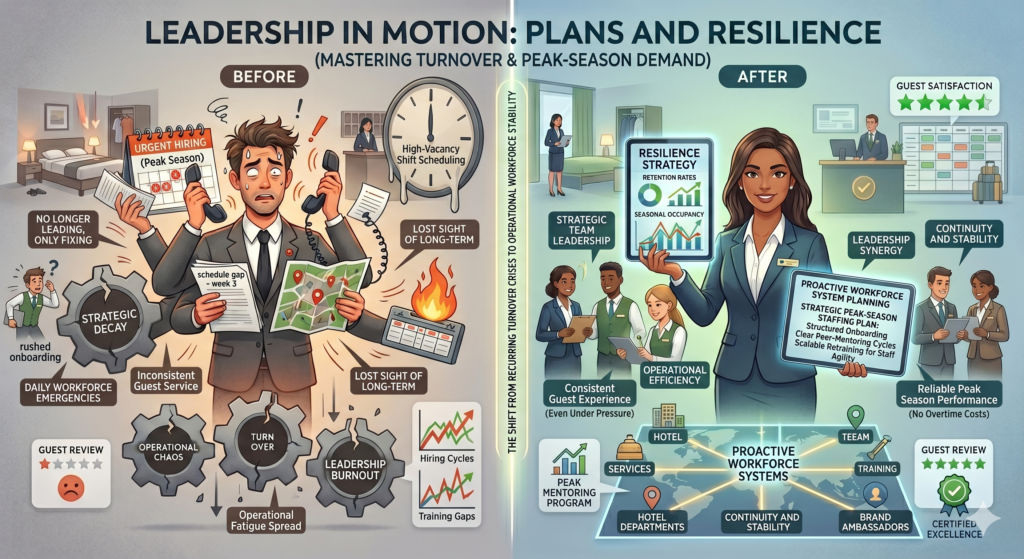
High turnover has become one of the most expensive operational challenges in hospitality, especially during peak tourism seasons when businesses are already operating under pressure. Many operators focus on the direct cost of replacing employees, but the true impact of turnover runs much deeper throughout daily operations. When employees leave during high demand periods, businesses are often forced into reactive hiring and rushed onboarding. Managers spend valuable time filling schedules instead of improving operations. Experienced employees become overextended. Productivity begins to decline across departments. In hospitality, turnover affects far more than staffing numbers. It affects consistency. A new employee may require training, supervision, and adjustment time before performing at the same level as an experienced team member. During that transition period, operational flow can become uneven. Housekeeping delays may affect check in readiness. Restaurant service may slow down. Front desk pressure may increase during busy arrival periods. Communication between departments may weaken under stress. Over time, these issues begin impacting the guest experience. Many hospitality businesses underestimate how quickly operational fatigue spreads when staffing instability becomes constant. Employees working in short staffed environments often experience burnout, frustration, and lower morale. This creates additional turnover pressure and makes retention even more difficult. The financial cost of turnover also extends beyond hiring. Businesses often experience: During peak seasons, these disruptions become even more visible because operations are expected to perform at a higher level while handling increased occupancy and guest demand. The strongest hospitality operators understand that retention is not simply an HR objective. It is an operational priority. Businesses that invest in workforce stability often experience: As labor pressure continues affecting the hospitality industry, workforce retention is becoming increasingly important to maintaining operational stability. In today’s environment, reducing turnover is not only about saving money. It is about protecting operational performance.
Why Labor Shortages Are an Operational Risk, Not Just an HR Problem
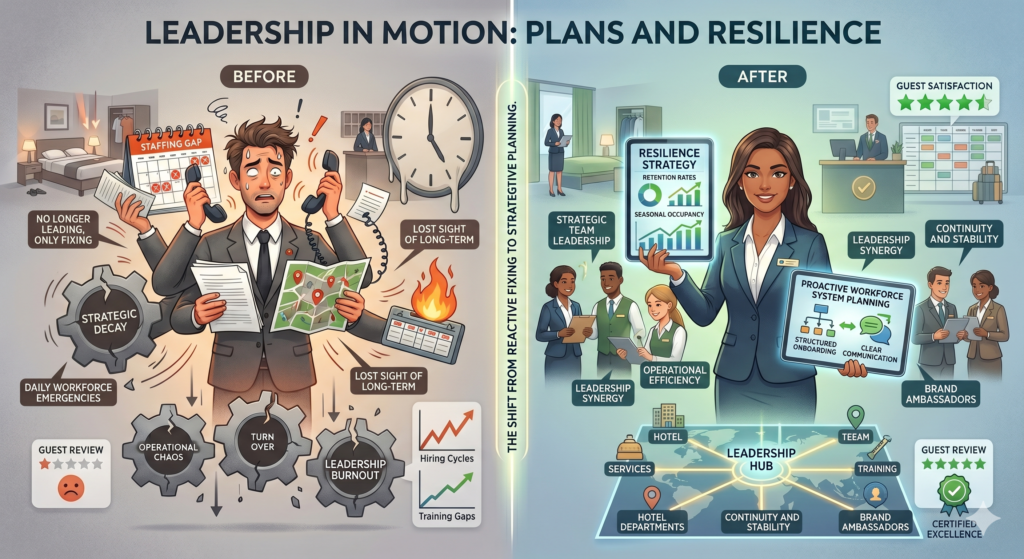
For many hospitality businesses, labor shortages are still viewed primarily as a hiring issue. But in reality, staffing challenges impact far more than recruitment. They impact operations. When hotels, resorts, and restaurants operate without enough stable staff, the effects spread throughout the entire business. Managers are forced to shift their focus away from leadership and long term planning to constantly solving daily workforce problems. Departments begin operating under pressure. Communication weakens. Employees become overextended. Service consistency starts to decline. In hospitality, even small staffing gaps can create major operational disruptions. A delayed housekeeping schedule can affect check in times. A shortage in food and beverage staffing can increase wait times and reduce guest satisfaction. Front desk pressure can impact the guest experience from the moment a visitor arrives. Over time, operational strain creates burnout across departments. This is one of the reasons turnover becomes difficult to control in labor constrained environments. Employees working in constantly understaffed operations often experience fatigue, frustration, and lower morale. As turnover increases, businesses enter a cycle of continuous hiring and retraining that becomes expensive and difficult to stabilize. Many hospitality operators underestimate how closely workforce stability is tied to operational performance. Strong operations depend on: Without these elements, even experienced leadership teams struggle to maintain operational consistency during busy periods. The challenge becomes even greater during peak tourism seasons when occupancy levels rise and guest expectations increase. Businesses operating reactively often find themselves trying to solve staffing shortages while simultaneously managing operational pressure. The most successful hospitality operators are increasingly approaching workforce planning as part of operational strategy rather than treating staffing as an isolated HR function. This shift is important. Labor stability influences: Hospitality businesses that build proactive workforce systems are often better prepared to handle growth, maintain service standards, and operate more consistently during high demand periods. In today’s hospitality environment, labor strategy is no longer separate from operations. It is part of operations.
The Hidden Cost of Inconsistent Staffing in Hospitality
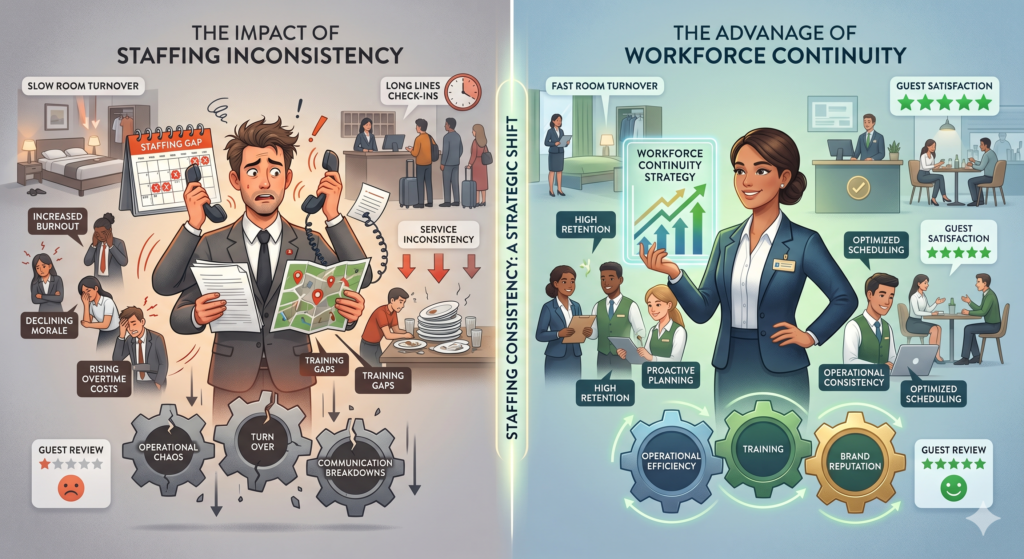
The hospitality industry often discusses labor shortages in terms of hiring difficulty. But one of the biggest operational threats facing hotels, resorts, and restaurants today is not simply a shortage of workers. It is staffing inconsistency. Inconsistent staffing quietly impacts operations long before financial reports reveal the damage. A property may technically remain operational while simultaneously experiencing: These issues compound over time. In hospitality, operational consistency is directly connected to workforce stability. When businesses are forced into reactive hiring cycles, managers spend more time solving staffing emergencies than improving operational performance. High turnover creates a continuous cycle of: Even highly capable leadership teams struggle when workforce instability becomes constant. The operational impact is especially severe during peak tourism seasons, when demand increases rapidly and departments are expected to perform under pressure. A single staffing gap in housekeeping, food service, maintenance, or front desk operations can create ripple effects across the entire guest experience. Many hospitality businesses underestimate how closely labor consistency is tied to profitability. When staffing becomes unstable: The long-term cost is not only financial. It affects brand reputation and operational resilience. The strongest hospitality operators are increasingly shifting their focus away from reactive hiring and toward workforce continuity strategies. That means building systems that support: As the hospitality industry continues facing labor pressure, businesses that prioritize workforce continuity will be far better positioned to maintain operational performance during high-demand periods. In today’s environment, staffing consistency is no longer simply an HR issue. It is an operational strategy.
Why Restaurants Struggle With Workforce Stability

The Real Problem Isn’t Hiring — It’s Workforce Structure Restaurant operators across the United States are hiring constantly, yet many still face chronic understaffing, missed shifts, burnout, and declining customer experience. The issue is rarely a lack of applicants alone. More often, the problem is the absence of a long-term workforce strategy. Many restaurant groups operate reactively — replacing workers only after positions become vacant. This creates a cycle of emergency hiring, inconsistent onboarding, and high turnover that compounds over time. At A & B Personnel Services, we believe workforce stability begins long before a job posting goes live. The Hidden Cost of Constant Hiring Every unfilled shift affects more than scheduling. When restaurants operate with unstable staffing, the impact spreads across the entire business: For multi-unit operators, these workforce gaps become operational risks — especially during seasonal spikes or expansion periods. Why Traditional Recruiting Often Fails Most recruiting efforts focus only on filling immediate openings. But hiring without workforce planning creates short-term fixes instead of long-term solutions. Restaurants commonly face challenges such as: Weak Local Talent Pipelines Relying on the same applicant pools repeatedly often leads to inconsistent staffing quality and ongoing turnover. Seasonal Workforce Volatility Tourism markets, holiday demand, and student workforce fluctuations create staffing instability that many businesses fail to prepare for early enough. Lack of Workforce Forecasting Many operators cannot accurately predict labor demand six to twelve months ahead, leading to reactive hiring and staffing shortages. Retention Without Structure Even when restaurants hire successfully, poor onboarding systems, inconsistent scheduling, and unclear advancement opportunities reduce long-term retention. A Strategic Workforce Approach Stable restaurant operations require more than recruiting support. They require workforce infrastructure. The Workforce Continuum™ focuses on aligning: This creates labor stability that compounds over time instead of restarting every hiring cycle. Building Workforce Stability Before Crisis Happens The strongest restaurant operators do not wait until staffing problems become emergencies. They build workforce systems proactively. A structured workforce strategy allows restaurants to: The goal is not simply to hire more workers. The goal is to create a workforce system capable of supporting long-term operational growth. Final Thought Restaurants that continue solving workforce issues one position at a time often remain trapped in constant labor instability. Businesses that step back and evaluate workforce strategy at the operational level position themselves for sustainable growth. Every workforce challenge has a root cause. Identifying it early changes everything.