Why Early Workforce Planning Matters in Seasonal Hospitality Operations
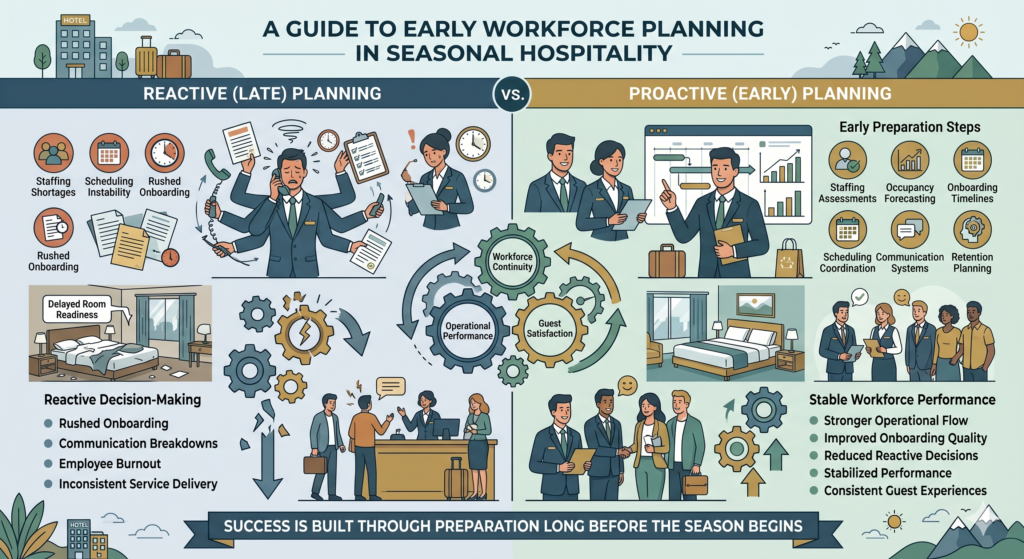
Seasonal hospitality operations move quickly once peak demand begins. Occupancy increases, guest expectations rise, and departments are expected to perform efficiently under significant operational pressure. For many businesses, however, workforce preparation begins too late. This creates challenges that become increasingly difficult to stabilize once operations are already busy. Early workforce planning plays a major role in maintaining operational consistency during high demand periods. Businesses that prepare staffing strategies in advance are often better positioned to manage scheduling, onboarding, communication, and operational coordination before peak season pressure affects daily operations. Many hospitality operators underestimate how much preparation is required behind the scenes to support stable workforce performance. Recruitment is only one part of the process. Successful workforce preparation often includes:• staffing assessments,• occupancy forecasting,• onboarding timelines,• scheduling coordination,• operational communication systems,• retention planning,• and contingency preparation for staffing disruptions. Without early preparation, businesses are often forced into reactive staffing decisions during the busiest periods of the season. This may lead to:• rushed onboarding,• scheduling instability,• communication breakdowns,• employee burnout,• and inconsistent service delivery across departments. Over time, these operational gaps begin affecting guest experience and overall operational performance. Hospitality operations depend heavily on workforce consistency. A shortage in housekeeping may delay room readiness. Front desk teams may face increased pressure managing guest concerns. Restaurant operations may struggle to maintain service speed during high volume periods. When staffing instability spreads across departments, operational execution becomes more difficult to maintain. The strongest hospitality businesses understand that workforce planning is directly connected to operational performance. Businesses that begin planning early are often able to:• maintain stronger operational flow,• improve onboarding quality,• reduce reactive management decisions,• stabilize workforce performance,• and support more consistent guest experiences during busy tourism periods. As labor shortages continue affecting hospitality markets nationwide, proactive workforce planning is becoming increasingly important to protecting operational continuity during peak seasons. In hospitality, successful operations during high demand periods are rarely the result of last minute staffing efforts. They are usually built through preparation long before the season begins.
Common Workforce Planning Mistakes Hospitality Employers Make Before Peak Season
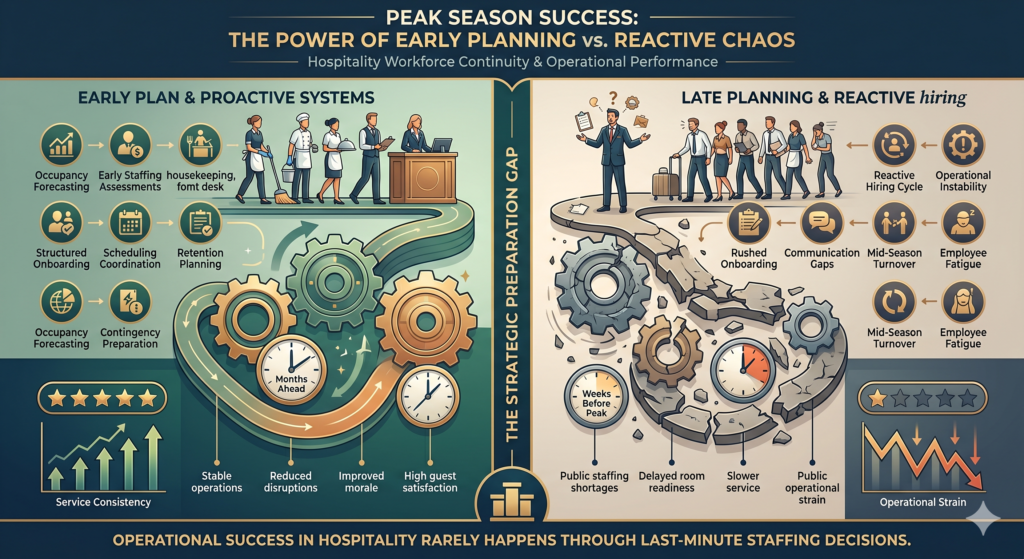
Peak tourism seasons place significant pressure on hospitality operations, yet many businesses continue making workforce planning decisions too late in the process. By the time staffing shortages begin affecting operations publicly, operational strain has often already been building behind the scenes for weeks or months. One of the most common mistakes hospitality employers make is underestimating how early workforce preparation should begin. Seasonal operations require more than simply increasing staffing levels shortly before occupancy rises. Businesses must prepare operationally for the increased demand that peak seasons create across housekeeping, food service, maintenance, guest services, and front desk operations. Without early planning, many properties are forced into reactive hiring cycles that create operational instability. Another common mistake is focusing only on recruitment while overlooking workforce coordination systems. Even when businesses successfully hire additional employees, operational pressure can still develop if onboarding, scheduling, communication, and department coordination are not prepared to support the increase in staffing. Hospitality operations depend heavily on consistency. When onboarding becomes rushed or departments are understaffed during busy periods, guest experience often begins suffering quickly. Delayed room readiness, slower service times, communication gaps, and employee fatigue can all impact operational performance during peak demand periods. Many businesses also fail to plan adequately for turnover during seasonal operations. High demand periods often create increased pressure on employees, especially when staffing levels remain unstable. Without workforce continuity planning, businesses may experience additional turnover at the exact time operational consistency becomes most important. Strong workforce planning typically includes: The strongest hospitality operators understand that workforce planning is directly connected to operational performance. Businesses that prepare early are often better positioned to: As labor shortages continue affecting hospitality operations nationwide, workforce preparation is becoming increasingly important to maintaining operational stability during peak tourism seasons. In hospitality, operational success during busy periods rarely happens through last minute staffing decisions. It is usually the result of preparation done well before demand arrives.
Understanding International Workforce Solutions for Seasonal Industries
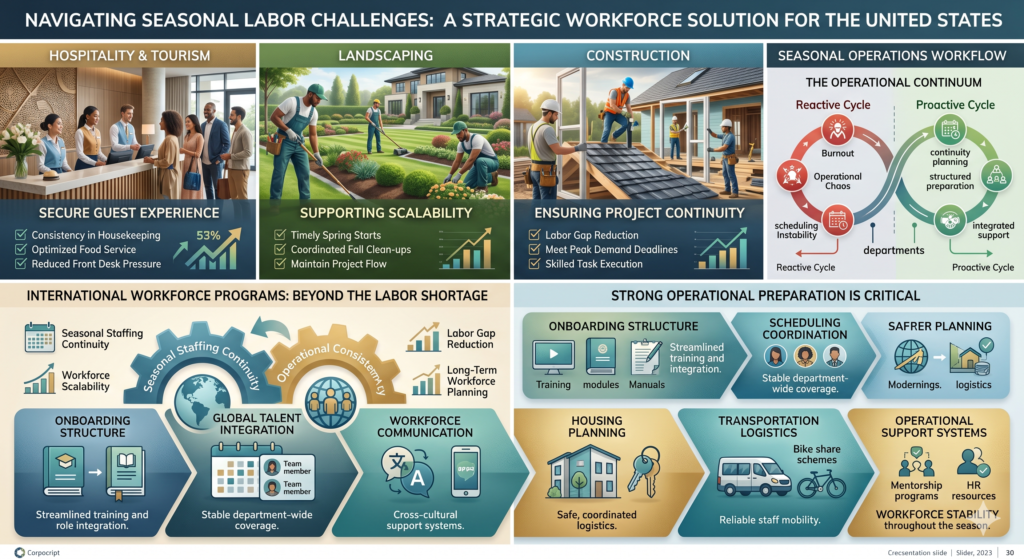
Seasonal industries across the United States continue facing growing labor challenges, especially in hospitality, tourism, landscaping, and construction. As demand increases during peak periods, many businesses struggle to maintain enough stable staff to support operations consistently. For many employers, international workforce solutions have become an important part of long term workforce planning. These programs are often misunderstood as simply a way to fill open positions. In reality, they are increasingly being used as operational workforce strategies designed to help businesses maintain continuity during periods of high demand. Seasonal operations depend heavily on timing, coordination, and workforce consistency. When businesses experience staffing shortages during peak periods, the effects can spread quickly throughout operations. Scheduling instability, employee burnout, service inconsistency, and operational delays often become more difficult to manage as demand rises. International workforce programs can help businesses prepare more proactively for these seasonal labor pressures. For hospitality businesses, workforce continuity is especially important because guest experience is directly tied to operational execution. Delays in housekeeping, understaffed food service operations, and front desk pressure can affect service quality very quickly during busy tourism seasons. Businesses that approach workforce planning strategically are often better positioned to stabilize operations before operational pressure begins affecting performance. International workforce solutions may support: However, successful workforce integration requires more than recruitment alone. Strong operational preparation is critical. Businesses must also consider: The most effective seasonal workforce strategies are usually the ones built around preparation and operational structure rather than reactive hiring. As labor shortages continue affecting seasonal industries, more businesses are recognizing that workforce stability has become closely tied to operational performance. International workforce solutions are not simply about filling labor shortages. They are increasingly becoming part of how seasonal businesses protect operational continuity during periods of high demand.
Workforce Solutions for Labor Constrained Hospitality Markets
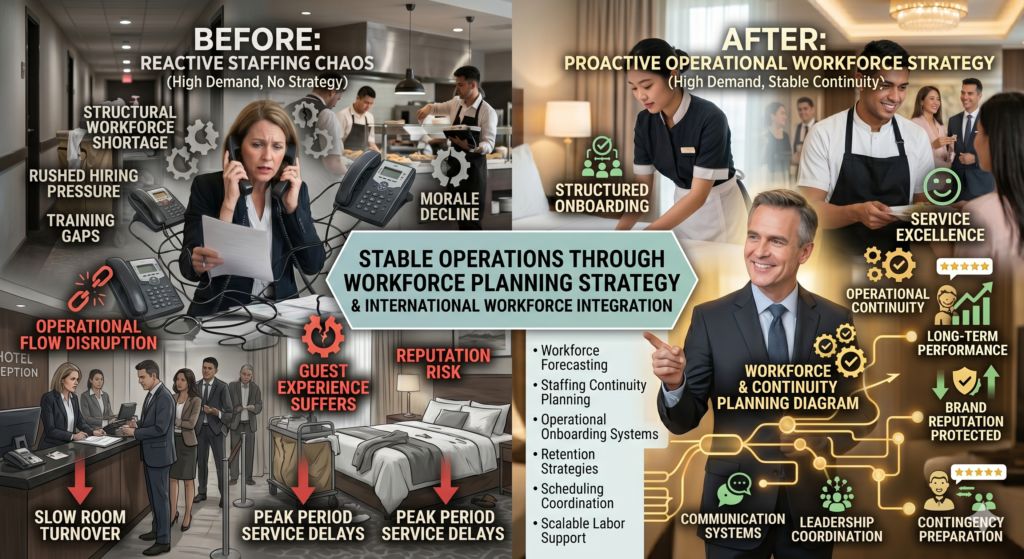
Hospitality businesses across many tourism driven markets continue facing one major operational challenge. Finding and maintaining enough stable staff to support consistent operations during periods of high demand. In labor constrained markets, staffing shortages affect far more than recruitment. They impact operational flow, employee morale, guest experience, and long term business performance. As occupancy levels rise, operational pressure increases quickly across departments. Housekeeping teams may struggle to maintain room turnover timelines. Food and beverage operations may experience service delays during peak periods. Front desk teams often face increased guest demands while managing operational issues simultaneously. Without stable workforce support, these pressures can create operational instability throughout the property. Many hospitality businesses attempt to solve these challenges reactively by increasing hiring efforts only after operations begin feeling strain. However, labor shortages in tourism driven markets are often larger structural workforce issues that require long term operational planning. This is why more businesses are focusing on workforce solutions designed to support operational continuity rather than temporary staffing reactions. Strong workforce strategies often involve: For some hospitality businesses, international workforce programs have become part of this larger workforce planning strategy. When integrated properly, these programs may help businesses maintain more stable staffing levels during periods of increased demand while reducing some of the operational pressure caused by labor shortages. However, successful workforce integration requires preparation and operational structure. Businesses that maintain stronger operational stability during peak seasons are usually the ones that prepare workforce systems before staffing pressure begins affecting operations publicly. This includes: The hospitality industry depends heavily on operational consistency. When staffing instability becomes constant, operational performance often begins declining gradually across departments. Over time, these disruptions can affect guest satisfaction, online reputation, employee morale, and long term retention. The strongest hospitality operators understand that workforce planning is directly tied to operational performance. As labor shortages continue affecting hospitality markets nationwide, businesses that invest in workforce continuity and operational staffing systems will likely be better positioned to maintain performance during high demand seasons. In hospitality, workforce stability is no longer simply a staffing issue. It is part of operational strategy.
How International Staffing Supports Operational Stability
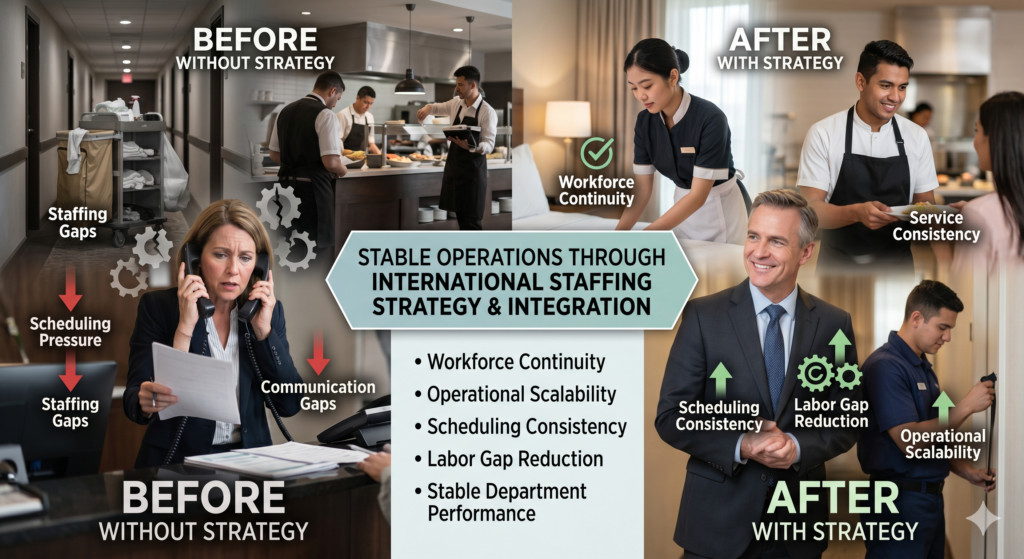
Operational stability has become one of the biggest challenges facing hospitality businesses during periods of high demand. As labor shortages continue affecting the industry, many employers are searching for workforce solutions that support more consistent operations throughout peak seasons. For many businesses, international staffing has become part of that strategy. Hospitality operations depend heavily on consistency across departments. Housekeeping, food service, maintenance, and guest services all rely on coordinated staffing to maintain service quality during busy periods. When workforce gaps begin affecting these departments, operational pressure often spreads quickly throughout the property. Managers may struggle to maintain schedules. Employees become overextended. Communication weakens under pressure. Guest experience may begin suffering as departments attempt to operate with unstable staffing levels. International staffing programs can help businesses reduce some of this operational strain by supporting workforce continuity during seasonal demand periods. However, successful workforce integration requires operational preparation. Businesses that benefit most from international staffing often approach workforce planning proactively rather than reactively. They prepare onboarding systems early, coordinate scheduling in advance, and build operational structures designed to support workforce consistency throughout the season. This preparation helps reduce disruptions that commonly occur during periods of rapid staffing growth. International staffing may support: For hospitality businesses, workforce stability directly affects operational execution. When staffing becomes inconsistent, operational disruptions often follow. Delays in housekeeping, slower service times, employee burnout, and communication gaps can all affect guest satisfaction and long term brand perception. Businesses that maintain more stable workforce structures are often better positioned to preserve operational consistency during busy tourism seasons. The strongest operators understand that staffing alone does not create operational stability. Operational systems matter equally. Clear communication, structured onboarding, leadership coordination, scheduling consistency, and workforce planning all play important roles in maintaining stable operations as staffing levels increase. As labor challenges continue affecting hospitality businesses nationwide, international staffing is increasingly being viewed as part of a larger operational workforce strategy. In today’s hospitality environment, operational continuity depends heavily on workforce consistency. International staffing can help support that stability when combined with strong operational planning and workforce structure.
Workforce Forecasting: The Missing Link in Hospitality Operations
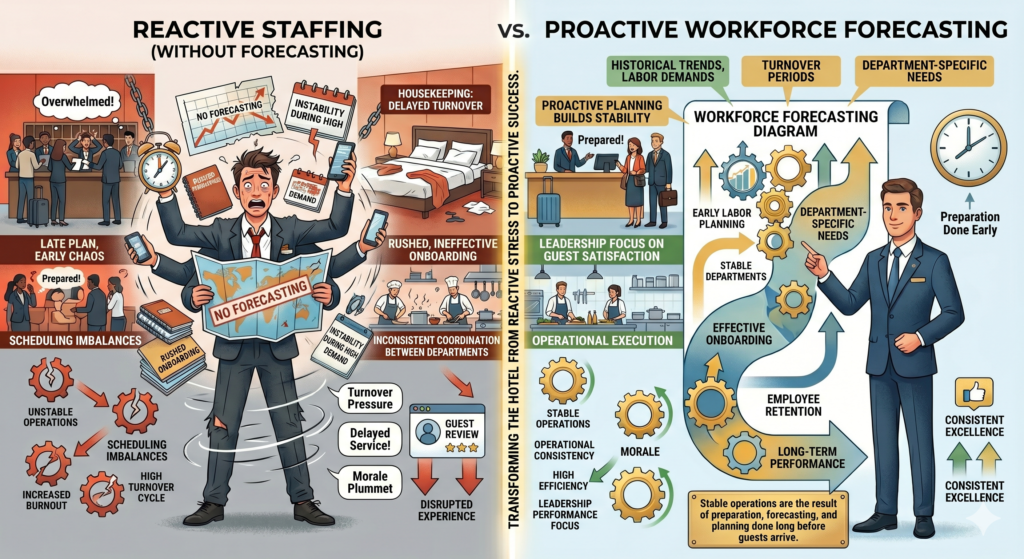
Many hospitality businesses spend significant time responding to staffing challenges, but far fewer invest enough time forecasting workforce needs before operational pressure begins. This gap often creates instability during high demand periods. Workforce forecasting is not simply about estimating how many employees may be needed during busy seasons. It is about understanding how labor planning affects operational performance across the entire property. In hospitality, labor demand changes quickly. Occupancy increases, seasonal events, tourism patterns, staffing turnover, and guest expectations all place pressure on operations at different times throughout the year. Without proper workforce forecasting, businesses are often forced into reactive staffing decisions that create operational strain. When workforce planning happens too late, managers may struggle to: Over time, these challenges affect both employee performance and guest experience. Many operators underestimate how closely workforce forecasting is tied to operational efficiency. A property may appear fully staffed on paper while still experiencing operational gaps due to scheduling imbalances, turnover pressure, onboarding delays, or inconsistent workforce coordination between departments. Strong workforce forecasting helps businesses prepare earlier and operate more strategically. This often includes: The hospitality businesses that manage growth most effectively are usually the ones that treat labor planning as part of operational forecasting rather than simply a recruiting function. This approach creates greater operational stability during high demand periods. It also allows leadership teams to focus more effectively on: As labor shortages continue affecting hospitality operations, workforce forecasting is becoming increasingly important to maintaining operational consistency and reducing reactive decision making. In hospitality, stable operations rarely happen by accident. They are often the result of preparation, forecasting, and workforce planning done long before guests arrive.
Why Reactive Hiring Creates Long Term Operational Problems
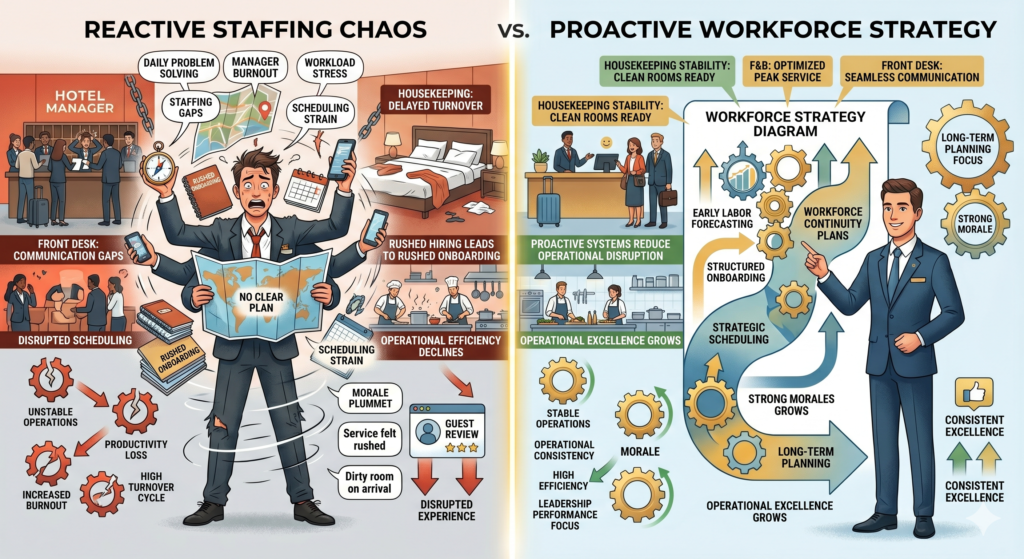
Reactive hiring has become common across the hospitality industry, especially during periods of labor shortages and high seasonal demand. Many businesses wait until operations are already under pressure before attempting to increase staffing levels. By that point, operational strain has often already begun affecting performance. Managers may struggle to fill schedules quickly enough to support occupancy demands. Departments become overextended. Existing employees take on heavier workloads. Communication gaps increase as operations attempt to move faster under pressure. This creates instability across the property. In hospitality, rushed hiring decisions often lead to rushed onboarding. Employees may enter operations without fully understanding procedures, communication expectations, or service standards. Over time, this can create inconsistency in execution across departments. Reactive hiring also creates additional pressure on leadership teams. Managers who should be focused on operational performance, guest experience, and long term planning are often forced into constant staffing adjustments and daily workforce problem solving. As staffing instability continues, operational efficiency becomes more difficult to maintain. The effects are rarely isolated to one department. Housekeeping delays can impact front desk operations. Food and beverage teams may struggle during peak service periods. Maintenance requests may take longer to address. Small operational disruptions begin affecting the overall guest experience. Many hospitality businesses underestimate how much workforce instability impacts operational culture. Employees working in reactive environments often experience: This can lead to additional turnover, creating a cycle that becomes increasingly difficult to stabilize. The strongest hospitality operators approach workforce planning differently. Rather than hiring reactively, they focus on: Proactive staffing systems help reduce operational disruption and allow leadership teams to focus more effectively on performance and guest satisfaction. As labor challenges continue affecting hospitality businesses, reactive hiring is becoming increasingly costly from both an operational and financial perspective. In hospitality, workforce instability rarely stays contained within recruitment. It eventually impacts the entire operation.
Operational Continuity During Peak Tourism Seasons
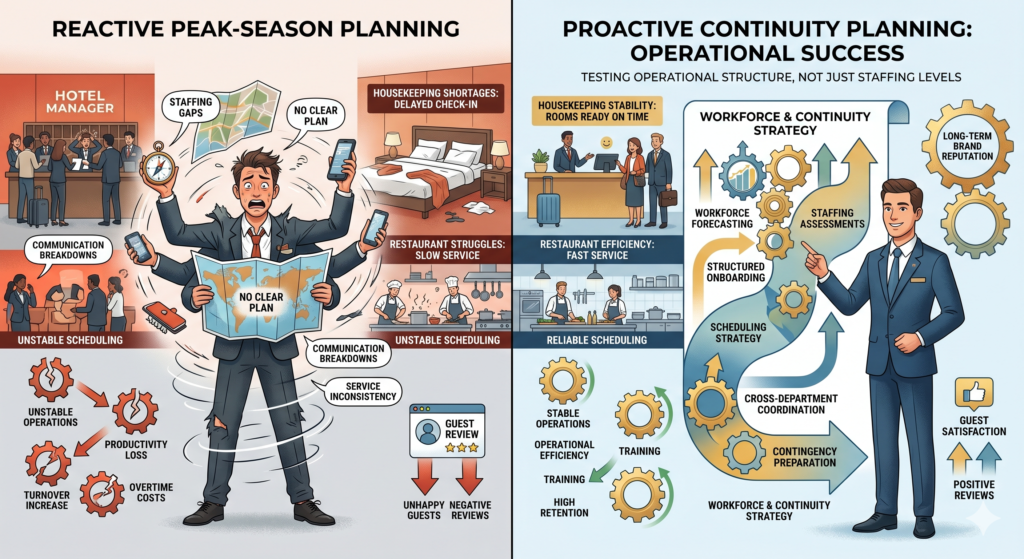
Peak tourism seasons create major opportunities for hospitality businesses, but they also place significant pressure on operations. As occupancy rises and guest expectations increase, maintaining operational consistency becomes more difficult for many properties. This is where operational continuity becomes critical. In hospitality, peak season performance depends heavily on how well businesses prepare before demand reaches its highest levels. Properties that operate reactively during busy periods often experience staffing instability, communication breakdowns, scheduling pressure, and service inconsistency across departments. These operational gaps can affect the guest experience very quickly. A shortage in housekeeping may delay room readiness. Restaurant teams may struggle to maintain service speed during high volume periods. Front desk staff may become overwhelmed managing increased guest traffic and operational issues simultaneously. When operations become unstable, managers are often forced into constant problem solving instead of focusing on leadership and performance. Operational continuity helps reduce this pressure. Strong hospitality operations typically rely on systems that support: Businesses that prepare early are often better positioned to maintain smoother operations throughout peak season. This preparation may include: Many hospitality operators underestimate how closely operational continuity is tied to workforce stability. High turnover, inconsistent staffing, and rushed onboarding can create operational strain long before guest complaints begin appearing publicly. Employees working in unstable environments may experience burnout more quickly, especially during busy tourism periods when operational pressure is already elevated. The strongest hospitality businesses understand that peak season success is not driven by occupancy alone. It is driven by execution. Properties that maintain operational continuity during high demand periods are often able to: As labor challenges continue affecting the hospitality industry, operational continuity is becoming increasingly important to maintaining performance during tourism peaks. In hospitality, busy seasons do not simply test staffing levels. They test operational structure.
Seasonal Workforce Planning for Hospitality Businesses
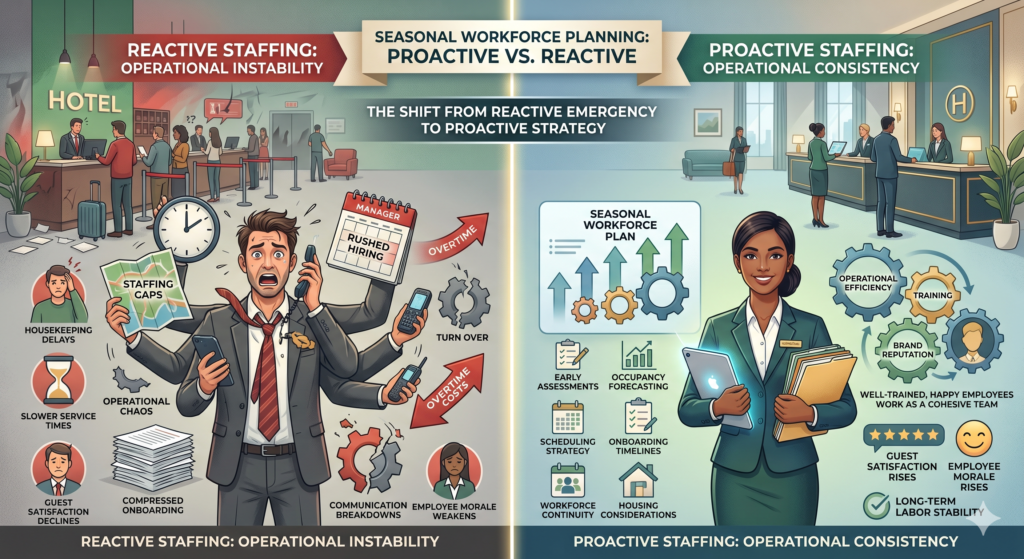
For many hospitality businesses, seasonal demand creates both opportunity and operational pressure. As occupancy levels increase during tourism peaks, the ability to maintain consistent staffing becomes critical to operational performance. Yet many businesses still approach seasonal staffing reactively. Hiring often begins only after operations are already feeling pressure. Managers rush to fill schedules, departments become overextended, and onboarding processes become compressed under time constraints. This creates instability before peak season even fully begins. Successful hospitality operations typically approach workforce planning much earlier. Seasonal workforce planning is not simply about filling positions. It involves preparing operationally for periods of increased demand while maintaining service consistency across departments. This requires coordination between: Many operators underestimate how quickly staffing shortages can impact operational flow during high occupancy periods. Housekeeping delays, slower service times, scheduling gaps, and employee fatigue can create operational strain across the property. Over time, these disruptions begin affecting guest satisfaction, employee morale, and operational efficiency. Proactive workforce planning helps reduce these risks. Businesses that prepare early are often better positioned to: Seasonal hospitality operations also face unique workforce challenges because demand can increase rapidly within a short period of time. Without a structured staffing strategy, businesses may struggle to scale operations efficiently while maintaining service standards. Strong seasonal workforce planning often includes: The hospitality businesses that manage peak seasons most effectively are usually the ones that treat workforce planning as part of operational strategy rather than an emergency response. As labor challenges continue across the hospitality industry, proactive workforce planning is becoming increasingly important to maintaining operational stability and protecting guest experience during high demand periods. In hospitality, successful peak seasons are rarely driven by demand alone. They are supported by preparation, structure, and workforce continuity.
Why Workforce Stability Impacts Guest Experience More Than Most Hotels Realize
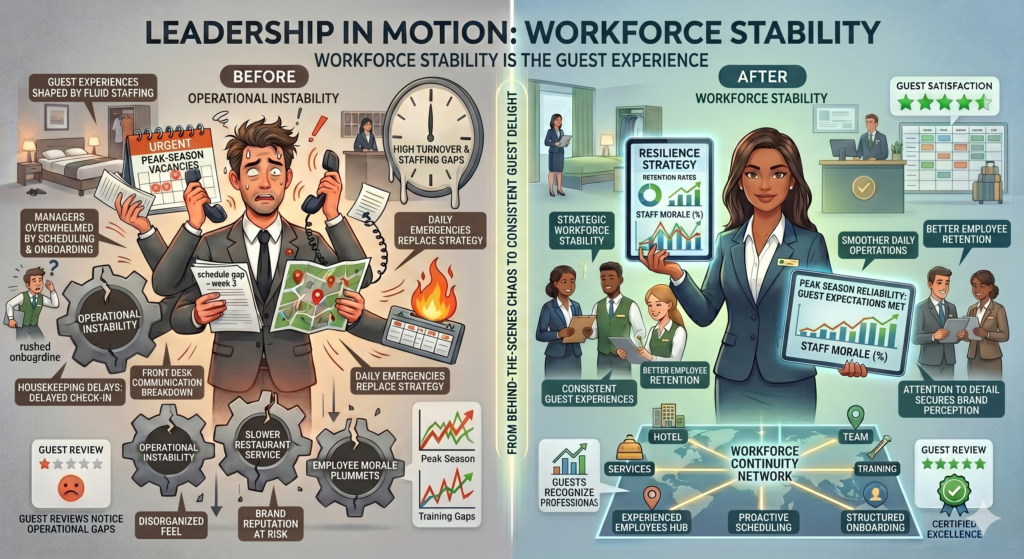
In hospitality, guest experience is often measured through reviews, service ratings, and brand reputation. But behind every strong guest experience is something many businesses overlook. Workforce stability. Guests may never see the operational challenges happening behind the scenes, but they quickly notice the effects when operations become inconsistent. A delayed room check in, slower restaurant service, housekeeping inconsistencies, or communication breakdowns at the front desk can all shape how guests view a property. In many cases, these problems are connected directly to staffing instability. Hospitality operations rely heavily on coordination between departments. When staffing levels fluctuate constantly, maintaining operational consistency becomes difficult. Managers spend more time adjusting schedules, onboarding new employees, and solving staffing gaps instead of focusing on service quality and operational improvement. This pressure often increases during high demand tourism seasons when guest expectations rise alongside occupancy levels. Experienced employees play a major role in maintaining service consistency. They understand operational flow, communication standards, guest expectations, and department coordination. High turnover and unstable staffing environments make it difficult to preserve that consistency across operations. Over time, workforce instability can impact: Even small operational disruptions can create ripple effects throughout the guest experience. For example, delays in housekeeping may affect room readiness. Front desk teams may face pressure managing guest concerns. Restaurant operations may experience slower service during peak periods. These operational gaps often become visible to guests very quickly. Many hospitality businesses underestimate how closely workforce consistency is tied to brand perception. Guests may not know why service feels disorganized, but they recognize when operations feel smooth, coordinated, and professional. The strongest hospitality operators understand that guest satisfaction starts long before a guest arrives at the property. It begins with operational stability behind the scenes. Businesses that prioritize workforce continuity often create: As the hospitality industry continues facing labor pressure, workforce stability is becoming increasingly important to maintaining operational performance and protecting long term brand reputation. In hospitality, guest experience and workforce stability are deeply connected. One cannot consistently succeed without the other.